




Digital attacks rarely announce themselves.
More often, they emerge quietly — through small gaps, overlooked assumptions, or a single weak point that seems insignificant until it is not. For modern businesses, the risk is not just whether a system can be attacked, but how prepared it is to detect, contain, and recover.
In today’s environment, businesses must treat their systems as business shields — not just operational tools, but protective layers against increasingly sophisticated digital attacks.
Recently, we encountered a real-world scenario involving unauthorised access within a live system. While the specifics are not important, the lessons are highly relevant to any organisation operating in a digital environment.
The Nature of Modern Digital Attacks
A common misconception is that digital attacks are the result of a single vulnerability. In reality, they often arise from a combination of factors working together:
- Application-level weaknesses
- Misconfigurations or exposed routes
- Human factors such as weak or reused passwords
Individually, these issues may appear manageable. Combined, they create opportunity — not just for opportunistic attackers, but for threats that increasingly resemble patterns seen in broader national security contexts, where layered weaknesses are systematically exploited.

In this case, there were two plausible paths: either a vulnerability was exploited within the application, or an administrator account was compromised. Both scenarios were treated as equally likely — a critical mindset when responding to digital attacks.
Identifying the Weak Points
The investigation revealed several gaps that, while not catastrophic on their own, collectively increased risk:
- Unintended exposure of a registration pathway
- Insufficient access controls around user roles
- Lack of multi-factor authentication for administrators
- No rate limiting on login attempts
- System responses that revealed whether accounts existed
- Edge-case vulnerabilities in password reset behaviour
Platforms like SentinelOne and similar security tools are designed to detect these patterns at scale — but without strong application-level controls, even the best tools can only respond after the fact.
This highlights an important truth: digital attacks succeed not because of one major failure, but because of multiple small ones aligning.
Immediate Containment and Response
The first step in mitigating digital attacks is containment.
We took decisive action to reduce risk immediately:
- All active sessions were invalidated to force re-authentication
- Access pathways were restricted to controlled interfaces
- Privilege escalation routes were closed
- Authentication mechanisms were hardened
At this stage, speed is more important than certainty. Acting quickly limits exposure and prevents further escalation.
Strengthening Against Future Digital Attacks
Following containment, the focus shifted to long-term resilience. Several improvements were implemented to reduce the likelihood and impact of future digital attacks:
- Enforcing Least Privilege: Access is now explicitly controlled. Only authorised administrators can create accounts or assign roles.
- Strengthening Authentication: Multi-factor authentication is now mandatory for administrative users, and login attempts are rate-limited to prevent brute-force access.
- Reducing Information Exposure: System responses no longer reveal whether an account exists, mitigating the risk of enumeration attacks.
- Improving Visibility and Monitoring: A dedicated security log now tracks authentication events, account changes, and role updates, including timestamps and IP addresses. This provides a clear audit trail for future investigations.
- Enhancing Accountability: Role changes are timestamped at the database level, ensuring full traceability of privilege escalation events.
The Role of Human Factors in Digital Attacks
One of the more difficult aspects of any incident is determining whether the root cause was technical or human.
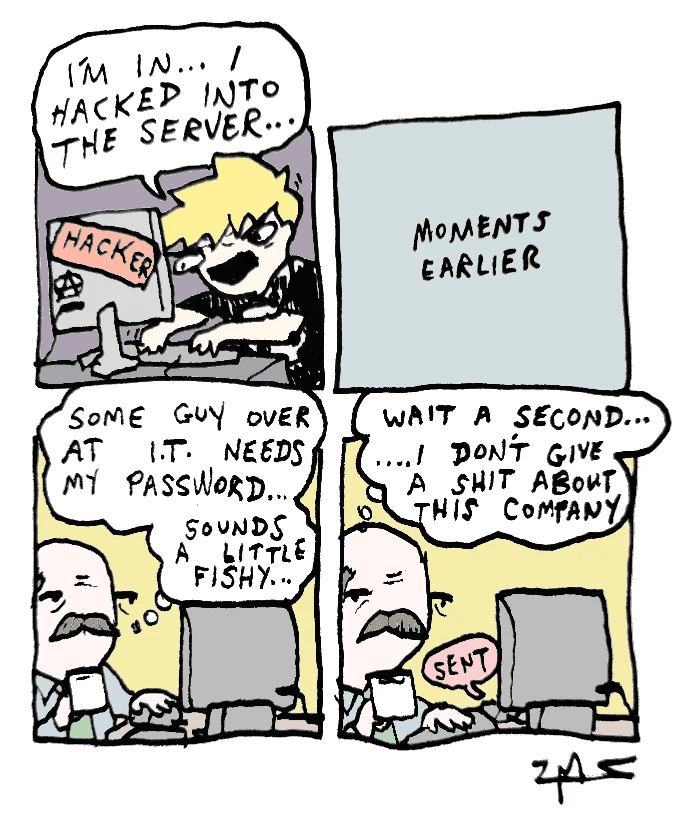
In reality, this distinction is often misleading.
Human behaviour is not separate from system design — it is part of it.
People do not operate in perfect rationality. They operate under time pressure, cognitive load, and habit. When something appears urgent, authoritative, or routine, the mind tends to favour speed over scrutiny. A request that “looks about right” is often accepted without deeper verification.
This is where many digital attacks find their opening.
Social engineering, phishing, and credential compromise are rarely sophisticated in a technical sense — they are effective because they align with predictable human tendencies:
- Trust in perceived authority
- Desire to be helpful or responsive
- Fatigue from repetitive digital interactions
- Overconfidence in recognising threats
This is particularly relevant in environments with adult learners — experienced professionals who are confident in their judgement, but may not have been trained to recognise evolving digital attack patterns.
Secure Systems Account for Human Error
In many cases, the individual is not careless — the system simply did not create enough friction to pause the action. Good security design accounts for this. It assumes that someone will reuse a password, click a link they shouldn’t or respond to a request that feels legitimate. It builds safeguards around those realities.
The question is not whether human error will occur or if you get reported attacks — it is whether the system is resilient when it does happen. Digital attacks often exploit the intersection of both — where system design does not adequately protect against human error, and human behaviour exposes system weaknesses.
This reinforces the importance of layered security, where safeguards exist across both technology and user behaviour.
Key Takeaways
From this experience, several principles stand out:
- Incidents are rarely caused by a single failure — they emerge from combined weaknesses
- Security must be layered, with multiple overlapping controls acting as modern business shields against digital attacks
- Default configurations should never be assumed secure
- Visibility and logging are essential for detection and recovery
- Rapid response significantly reduces the impact of digital attacks
Final Thoughts
Mitigating digital attacks is not about achieving perfect security. It is about building systems that can withstand, detect, and recover from inevitable challenges.
We hope that sharing our real world experience will benefit you to navigate the cybersecurity maze with more confidence. Every incident provides an opportunity to strengthen not just the system, but the processes and thinking behind it.
In a landscape where digital attacks continue to evolve, resilience is the true measure of security.